

Construction, Real Estate, Property And Data
Data has become the cornerstone of innovation and efficiency in construction, real estate, and property management. In 2024, adopting data-driven technologies, from AI-powered analytics to IoT devices, reshape these industries by enhancing decision-making, boosting productivity, and advancing sustainability.
Read more on Citiesabc
“A great building must begin with the immeasurable, must go through measurable means when it is being designed, and in the end must be unmeasured.” — Louis Kahn
This chapter examines the transformative role of data in construction, real estate, and property. Beginning with the data transformation, it discusses how digital insights drive smarter planning and asset management.
It covers data collection and sources, from IoT sensors to client data, and explores Data’s Impact on key industry areas, such as project design and operational efficiency. The chapter also addresses data management and privacy challenges in handling sensitive information and concludes with outreach and industry expansion, showing how data enables broader engagement and growth.
The Data Transformation in Construction, Real Estate, and Property

In 2024, data-driven innovation is integral to competitive advantage in construction, real estate, and property management. With technologies such as AI, digital twins, and IoT sensors, firms can monitor projects in real time, assess market trends, and anticipate operational needs.
- Construction: The construction industry, known for its low productivity growth, now leverages data to improve project timelines and safety. By collecting and analysing site data, companies can predict potential delays, optimise resource allocation, and improve worker safety.
- Real Estate and Property Management: In real estate, data analytics is transforming property valuation, tenant management, and sustainability efforts. Intelligent systems use data to predict market trends, allowing investors and managers to make informed decisions. Tenant behaviour data, for example, helps property managers optimise amenities and engagement.
Data Collection and Sources
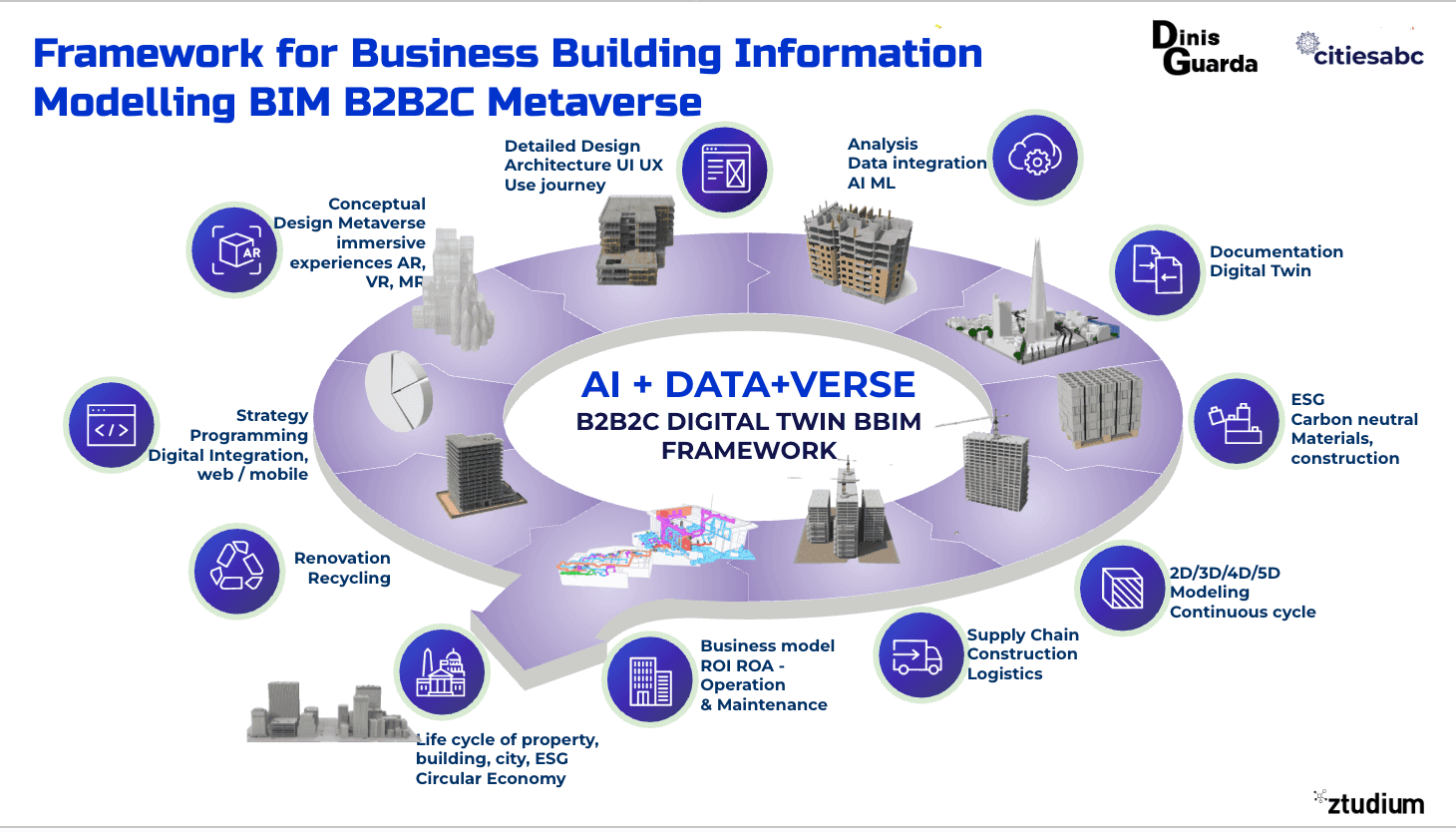
Data in these industries is sourced from various technologies, each contributing unique insights that enhance decision-making and strategic planning.
- Building Information modelling (BIM): BIM technology captures project data throughout the construction lifecycle, from initial design to post-completion. This data allows for detailed analysis of building performance and enables adjustments during construction, enhancing accuracy and reducing waste. BIM market size is projected to reach from USD 8.0 billion in 2024 to USD 14.8 billion by 2029 (MarketsandMarkets).
- Internet of Things (IoT) and Smart Sensors: IoT-enabled devices monitor everything from air quality to occupancy rates in real estate. For example, smart thermostats and lighting systems adjust energy consumption based on usage, contributing to sustainability goals. As of 2022, there were over 1.5 billion connected IoT devices installed in commercial smart buildings, which is projected to grow at a 13.7% compound annual growth rate (CAGR).
- Digital Twins: Digital twins are virtual replicas of physical assets, allowing real-time monitoring and predictive maintenance. A recent study shows that digital twins can reduce operational costs by up to 25% by proactively addressing structural issues and optimising building performance.
- Market Data and Predictive Analytics: Real estate investors and developers rely on market data to understand buyer trends, property values, and demographic shifts. Predictive analytics enable property managers to anticipate market trends, assess risks, and optimise investment strategies.
Read about The AI Sovereign Cloud Data Centre Power Models
Data’s Impact on Key Industry Areas
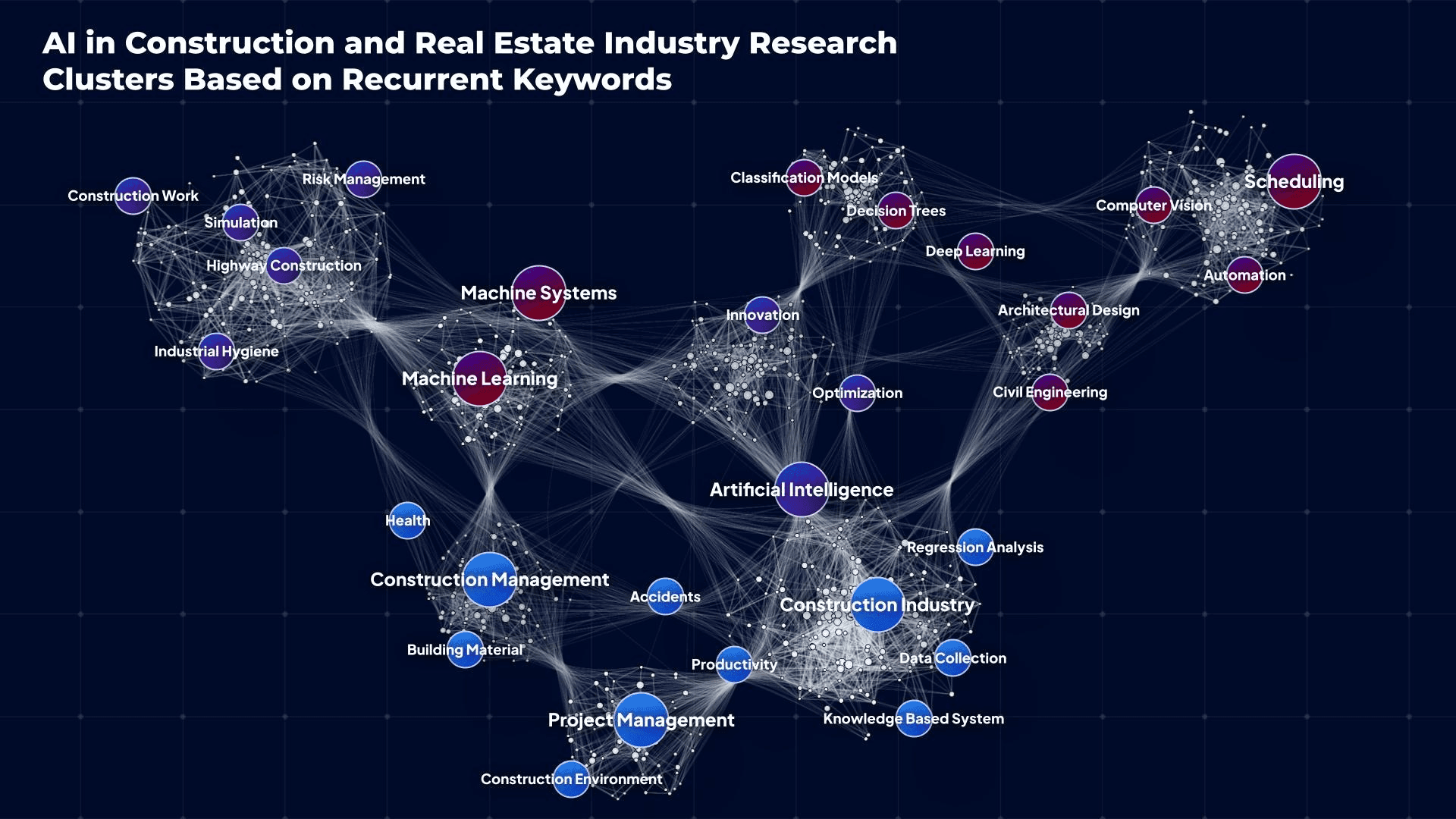
- Improving Efficiency and Reducing Costs: Data-driven insights allow firms to optimise resource allocation, minimise downtime, and reduce waste. For example, construction firms that adopt predictive analytics to anticipate delays can avoid costly project overruns.
- Enhancing Customer Experience in Real Estate: In real estate, data enables personalised experiences and proactive customer engagement. AI-driven platforms analyse customer preferences, suggesting properties that match individual needs and budgets.
- Supporting Sustainability Goals: Data is a powerful tool for sustainability, helping firms track and reduce carbon emissions. In property management, data from IoT devices monitors energy usage, waste, and water consumption, allowing managers to meet sustainability targets and reduce costs. AI has the potential to help mitigate 5-10% of global GHG emissions by 2030. (World Economic Forum, 2024).
- Predictive Maintenance and Facility Management: Data enables proactive maintenance, improving building longevity and safety. Facility managers use predictive analytics to assess when equipment needs servicing, preventing costly breakdowns and ensuring tenant satisfaction. According to Deloitte, Predictive maintenance can decrease facility downtime by 5%-15%, providing a substantial improvement in operational efficiency and reliability. (Deloitte, 2024).
- Operational and Communication Management: Operational and communication data can enhance the planning of the build process. The insights gained from communication are crucial for facilitating early adjustments, promoting transparency, and ensuring effectiveness and efficiency throughout the build. By leveraging this information, we can streamline the overall process and achieve better outcomes.
Data Management and Privacy Challenges
The increased use of data introduces new challenges in terms of data management, privacy, and cybersecurity. Regulations like the GDPR in Europe and the CCPA in California enforce strict data protection standards, making compliance a critical issue for firms managing sensitive tenant or employee data.
- Data Privacy Concerns: Privacy concerns are particularly relevant in real estate, where tenant and occupancy data is collected continuously. This data can include personal details, location, and behavioural patterns, raising ethical concerns about data security and individual privacy.
- Cybersecurity Risks: As more buildings integrate IoT devices, the risk of cyberattacks grows. Hackers can exploit vulnerabilities in connected devices, potentially compromising tenant security and data. A survey by Accenture found that 45% of real estate firms in 2024 cited cybersecurity as their top concern regarding IoT adoption (Accenture, 2024).
Outreach and Industry Expansion Through Data
Data doesn’t just improve operations; it expands industry outreach by facilitating collaboration, transparency, and consumer engagement.
- Data-Driven Marketing and Consumer Insights: By analysing market and consumer behaviour data, real estate companies can better target marketing efforts, improving ROI and tenant retention. AI-driven market segmentation allows firms to customise outreach, attracting and retaining tenants with services tailored to their preferences.
- Data Sharing and Collaboration in Construction: In construction, data sharing across project stakeholders enhances collaboration and transparency, reducing misunderstandings and mismanagement. BIM and other data-sharing platforms are critical in aligning project goals, timelines, and resources.
- Supporting Sustainable Development Goals (SDGs): By monitoring and reporting data on energy usage, emissions, and waste, these industries contribute to global SDGs. Transparency in sustainability metrics attracts eco-conscious investors and tenants, expanding outreach to stakeholders focused on environmental impact.
Opportunities
- Enhanced Decision-Making: Data insights enable more accurate and proactive decision-making in project planning, asset management, and customer engagement.
- Operational Efficiency: Data-driven tools streamline workflows, improving productivity in design, construction, and property management processes.
- Customised Client Experiences: Data collection allows for personalised services, enhancing customer satisfaction and loyalty in real estate and property services.
- Predictive Maintenance: IoT and real-time data help anticipate maintenance needs, reducing downtime and extending asset lifespan.
- Industry Expansion: Data enables companies to identify new markets, refine their outreach strategies, and increase revenue opportunities.
- Sustainability and Compliance: Data allows tracking and reporting on sustainability efforts and ensures compliance with environmental and regulatory standards.
Challenges
- Data Privacy and Security: Handling sensitive client and operational data requires robust security measures to protect against breaches and ensure privacy.
- Data Integration: Integrating data from diverse sources like IoT sensors, CRM systems, and public records can be complex and resource-intensive.
- Quality and Consistency: Ensuring data accuracy and consistency across projects and departments is essential for reliable insights.
- Skill Gaps: Leveraging data effectively requires upskilling staff in data science, analytics, and digital tools, which can be challenging for traditional industry roles.
- High Initial Costs: Implementing data-driven systems, from IoT networks to data platforms, often involves significant upfront investment.
- Ethical Use of Data: The responsible use of data, particularly when profiling clients or employees, demands careful ethical consideration and adherence to regulations.
Conclusion
In 2024, data is a transformative asset across construction, real estate, and property management, improving productivity, enhancing customer experience, and advancing sustainability goals. From BIM and IoT to predictive analytics and digital twins, the application of data reshapes traditional industry practices and fosters innovation.
However, with these opportunities come challenges in data management, privacy and security. The industries that navigate these complexities effectively will set the stage for a future where data-driven decisions create resilient, sustainable, and customer-centric environments.