
Digital Transformation and technologies in Construction, Real estate, property
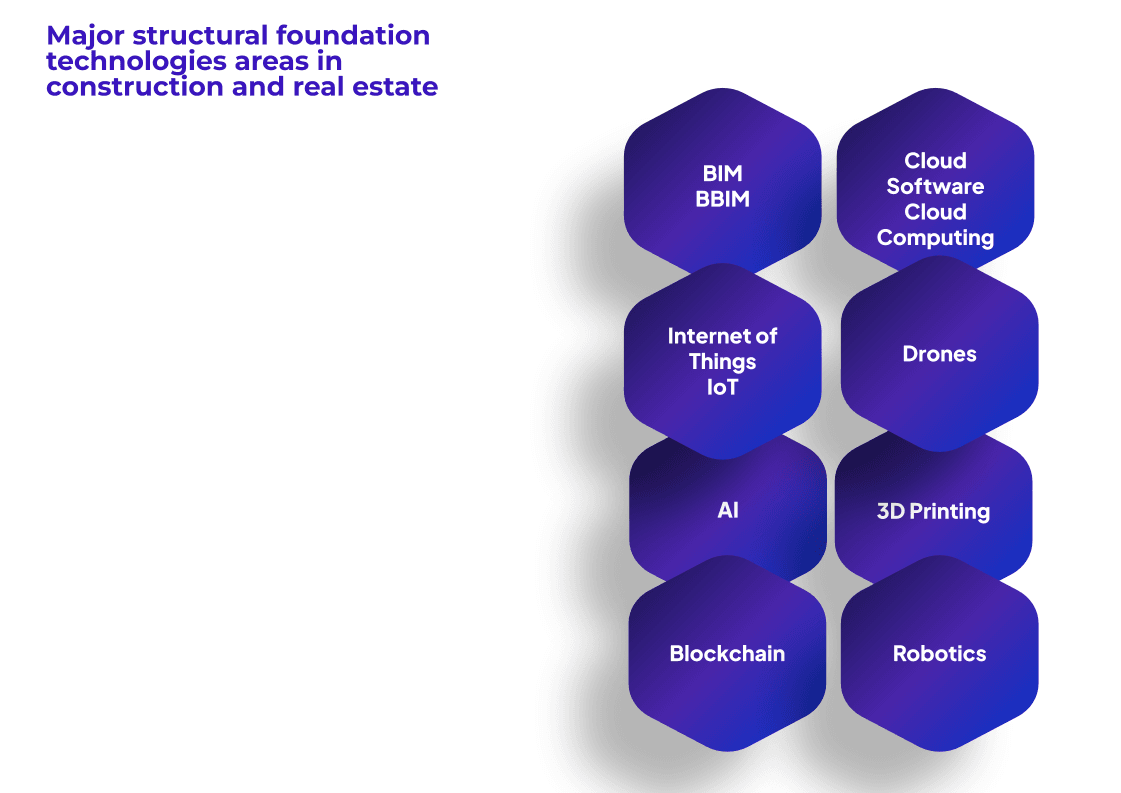
Digital transformation is rapidly advancing in construction, real estate, and property, driven by technologies such as Artificial Intelligence (AI), Blockchain, Internet of Things (IoT), and digital twins. These innovations are reshaping industry workflows, enabling more efficient operations, enhancing data security, and fostering sustainable practices.
Read about The Foundational Shift And Radical Changes In Construction and Real Estate: https://www.dinisguarda.com/foundational-shift-radical-changes-construction-real-estate/
“Soon, the digital divide will not be between the haves and the have-nots. It will be between the know-hows and the non—know-hows.” — Howard Rheingold
Digital transformation in construction, real estate, and property involves integrating advanced digital tools to streamline processes, improve data accuracy, and provide real-time decision-making capabilities. The Fourth Industrial Revolution (4IR) brings a range of technologies that connect physical assets with digital intelligence, enabling industries to operate with increased autonomy and efficiency.
These changes are critical in high-stakes industries such as real estate, where transparency, operational efficiency, and risk management are vital.
Why Digital Transformation Matters for the Construction Sector
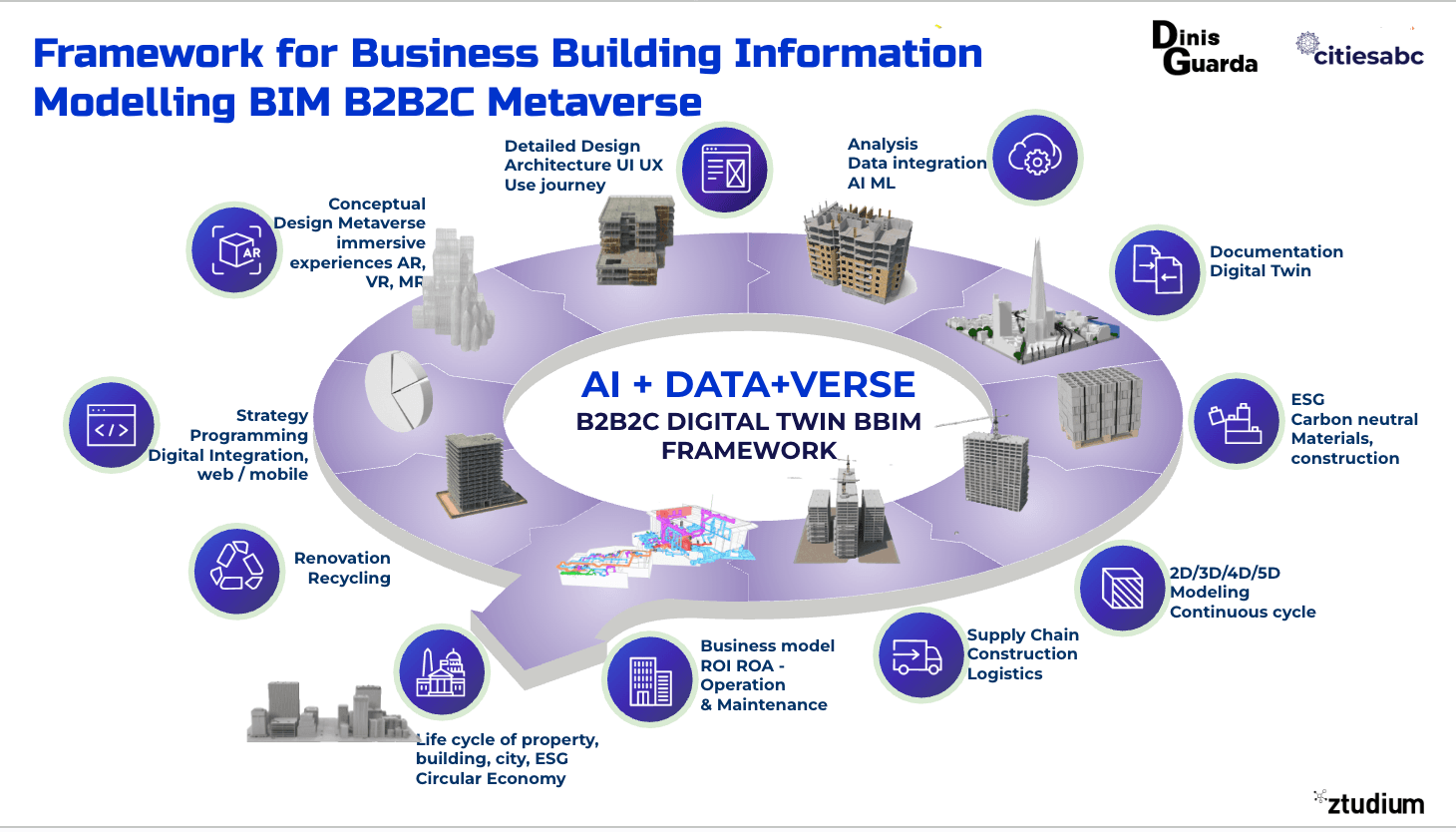
Framework for Business Building Information modelling BIM B2B2C Metaverse | An infographic by Dinis GuardaDigitalisation is essential for construction companies to stay competitive and relevant in today’s rapidly evolving landscape. It not only enhances operational efficiency, reduces costs, and drives productivity, but also supports sustainability goals through tools such as Building Information Modelling (BIM), project management software, and AI-powered analytics.
These technologies enable better decision-making, streamlined workflows, and real-time collaboration, helping companies tackle issues such as resource waste, labour shortages, and rising costs. Despite barriers like legacy systems and workforce resistance, digitalisation offers significant opportunities for companies willing to embrace innovation.
Those who fail to adapt risk falling behind, losing market share to more digitally advanced competitors, and missing out on critical growth opportunities. These topics, along with the challenges and opportunities presented by digital transformation in construction, will be explored in the following chapters.
Digital Transformation in Real Estate
Digital transformation in real estate is fundamentally reshaping how firms operate, interact with customers, and conduct transactions. The shift towards digitalisation is driving operational efficiency, enhancing agent productivity, and improving the overall client experience.
By integrating advanced technologies such as customer relationship management (CRM) systems, data analytics, and cloud-based solutions, real estate companies can offer smoother, faster services to buyers, sellers, and agents alike. This transformation not only optimises processes but also helps firms stay competitive in a rapidly changing market, positioning them to better serve clients’ needs while increasing internal efficiencies.
The Role of Technology in Modern Construction
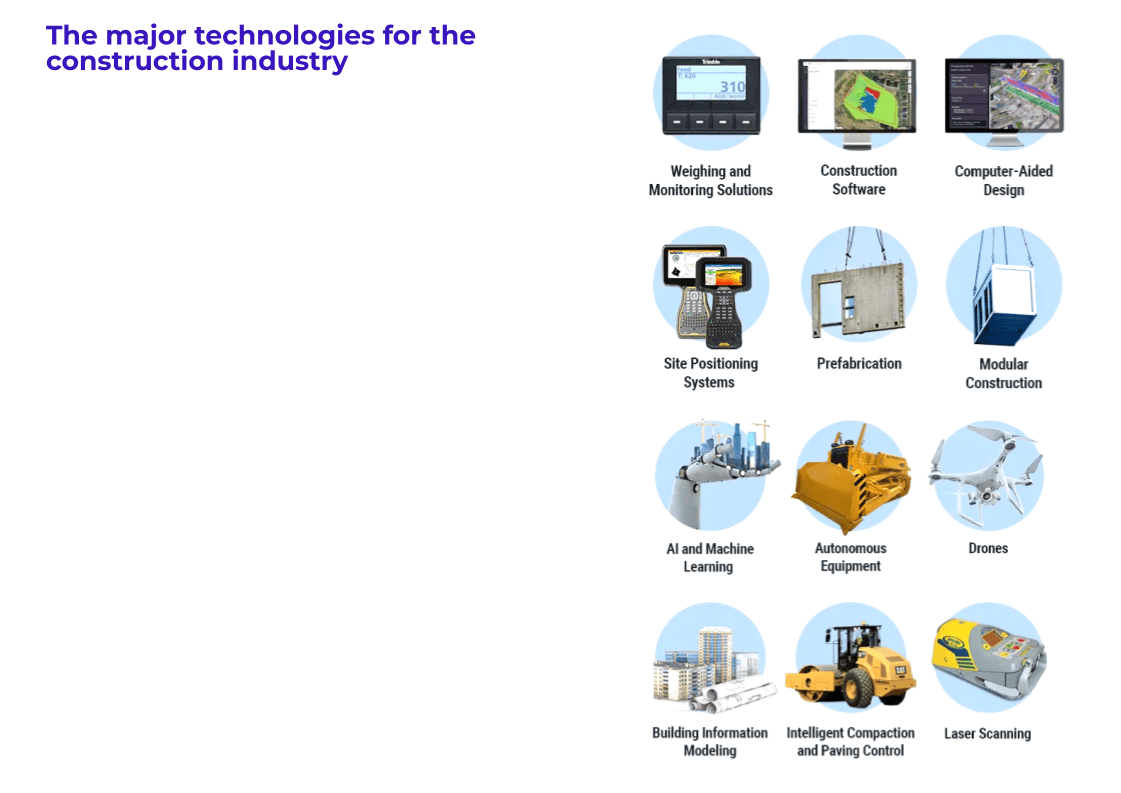
The 2021 Construction Technology Report by JBKnowledge reveals that 44% of contractors now have dedicated IT departments, reflecting a shift in the industry toward technology adoption. Construction companies are increasingly using tech solutions to streamline internal workflows, including estimating, project scheduling, and project management, alongside enhancing safety protocols. Here are some of the ways technology is helping with efficiency and safety:
- Wearables
The construction industry is exploring wearable technology to enhance workplace safety, leveraging features from consumer markets. Potential applications include tracking employees’ movements and vital signs, providing real-time alerts in hazardous conditions, and reducing risks. For instance, smartwatches can monitor fatigue in drivers and operators, while other wearables detect physiological responses to help prevent heat-related illnesses by alerting workers to heat stress.
- Mobile devices
Mobile capabilities have become essential in construction, with 85% of firms now considering them “important” or “very important,” up from 59% a decade ago, according to the JBKnowledge report. Smartphones, tablets, and other mobile devices are transforming construction processes, from blueprint approval to post-construction monitoring. For safety, mobile technology enables real-time team communication, rapid incident reporting, and efficient injury documentation, reducing injury risks and potentially lowering workers’ compensation costs.
- Telematics
Telematics, through phone apps, seatbelt monitors, AI sensors, and cameras, allows construction companies to capture driving behaviour and safety data. This technology enables data-driven decisions, helping firms protect employees, vehicles, and overall business performance.
- Robotics
Robotics is increasingly transforming various aspects of the construction industry, offering substantial benefits such as:
- Increased construction speed
- Less building-site construction waste
- Safer worksites and fewer injuries
Robotics in construction can lower costs related to construction, financing, and insurance. By allowing skilled workers to focus on project oversight, robotics enhance efficiency, particularly in tasks such as drywall installation, bricklaying, and demolition. Additionally, co-robotics such as exoskeletons help reduce the risk of musculoskeletal disorders by minimising overexertion during material handling and overhead work.
- Drones
The use of commercial drones in the construction sector is growing rapidly, with many companies already adopting the technology. Drones have become the most popular emerging technology in construction. What is driving this increased reliance? Construction workflows that rely on drones are growing rapidly. These include:
- Site mapping
- Site documentation
- Structural inspections
- Percent-complete calculations
- Real-time surveillance video
Drones offer significant time, cost, and safety advantages in construction. They enable preconstruction simulations, allowing builders to test models and designs, which reduces errors during actual construction. Additionally, the ability to perform tasks remotely lowers the risk of worker injuries.
- Job-site imagery
A recent study found that 26% of respondents view job site imagery, including crane cameras and 3D imagery, as crucial for a top-tier safety program. This technology helps identify hazards, track project progress, and ensure the build aligns with specifications.
- Water intrusion devices
Water intrusion can lead to delays, defects, mould, and pollution, costing time and money. However, IoT and cloud-based technology have removed cost and implementation barriers, making water intrusion detection more accessible and widely used in the construction industry.
- 3D printing
The future of construction technology is greatly influenced by 3D printing, a revolutionary process that allows the creation of three-dimensional objects from digital models. By depositing materials layer by layer, 3D printing offers unparalleled design freedom, enabling the production of complex geometries previously impossible with traditional methods.Revolutionary Applications of 3D Printing in Construction includes:
- Fabricating complex architectural designs: 3D printing excels at fabricating intricate architectural designs that would typically require substantial time and resources with traditional methods. Its precision and efficiency make these complex structures more feasible. Additionally, 3D printing speeds up manufacturing processes and significantly reduces waste, offering an environmentally friendly advantage in construction.
- Pioneering full-scale buildings: Full-scale buildings have been successfully printed using specially designed concrete mixtures, showcasing the potential for this technology to become commonplace in global housing markets as emerging construction methods gain traction.
Leveraging Tech for a Greener, Waste-Free Construction Industry
Technology in construction is transforming the industry by significantly reducing waste and promoting sustainability. IoT sensors, for example, can track material usage on construction sites in real time, offering valuable insights that help identify waste patterns. By detecting overuse or inefficiencies, construction teams can adjust their practices, reducing excess material consumption and ultimately saving money.
Moreover, advancements in digital technologies, such as 6D Building Information Modelling (BIM), are driving sustainability in construction. 6D BIM adds an environmental sustainability layer to the traditional 3D model, allowing for the integration of greener design elements, better resource allocation, and more precise sourcing of sustainable materials. These technologies also enable the tracking of carbon emissions throughout the project lifecycle, from design through construction, providing insights into energy consumption and helping to minimise the carbon footprint of construction projects.
Key Digital Transformation Technologies and Applications
- AI and Predictive Analytics
AI is used extensively for predictive analytics in real estate and construction, helping companies anticipate market trends, forecast property valuations, and automate asset management. By analysing historical data and real-time metrics, AI tools support decision-making and mitigate project risks. AI-powered predictive maintenance is also widely adopted, ensuring infrastructure health and extending asset lifespans.
A study reveals that AI reduces inspection costs by 25% and annual maintenance fees by up to 10%, as these tools identify potential issues before they become costly problems. Lendlease, a global construction company, reported that predictive analytics tools helped improve their project timelines and resource allocation, demonstrating AI’s tangible benefits in real-world applications. - Blockchain for Transparency and Security
Blockchain technology offers a secure, decentralised ledger system that enhances transparency and reduces fraud in real estate and construction. Smart contracts are widely used to manage transactions, automate payments, and enforce terms with reduced intermediary involvement. The transparency provided by blockchain enhances trust among stakeholders, from investors to regulatory authorities.
For example, Propy, a real estate platform using blockchain, has streamlined property transactions and reduced fraud risk. By ensuring that each transaction is recorded immutably, Propy offers a secure method for property sales and lease agreements, providing buyers and sellers with confidence in transaction integrity. - IoT and Smart Asset Management
IoT devices in construction and real estate monitor buildings in real-time, tracking energy consumption, maintenance needs, and occupancy rates. This continuous data stream allows property managers to optimise energy usage, plan maintenance schedules, and improve tenant satisfaction. IoT data, when integrated with digital twins, creates a virtual replica of a property that provides a dynamic view of asset health.
Technological Enablers in Digital Transformation
- Machine Learning and NLP for Document Processing
Machine learning and Natural Language Processing (NLP) enable companies to process contracts, assess legal risks, and automate documentation tasks. These tools enhance contrast accuracy and reduce time spent on administrative tasks. - Augmented Reality (AR) for Design and Planning
AR allows stakeholders to visualise properties and simulate building designs. AR applications provide immersive experiences that improve project planning accuracy and engage clients, offering a more interactive design approach. - 5G and Cloud Computing for Real-Time Data Sharing
5G networks and cloud solutions enable real-time data processing and access, allowing stakeholders to collaborate across geographic locations and receive timely updates on project progress and asset performance.
Opportunities
- Streamlined Processes: Digital transformation enhances operational efficiency by automating workflows, reducing manual tasks, and optimising resource allocation.
- Improved Data Accuracy: The integration of digital tools ensures high-quality data collection and management, leading to more reliable insights and decision-making.
- Real-Time Decision-Making: Access to real-time data allows stakeholders to make informed decisions quickly, improving responsiveness to project changes and challenges.
- Enhanced Collaboration: Digital platforms facilitate better communication and collaboration among teams, clients, and contractors, leading to more cohesive project execution. According to a study by GartnerDigital collaboration tool usage among workers surged from 40% at the beginning of 2020 to 80% within 18 months of the pandemic.
- Increased Autonomy: The implementation of smart technologies empowers teams to manage projects independently, minimising reliance on manual oversight.
- Cost Reduction: Digital transformation can lead to significant cost savings through increased efficiency, reduced waste, and improved project planning.
- Sustainability Improvements: Advanced digital tools support sustainable practices by optimising resource use and enabling effective monitoring of environmental impacts.
- Better Client Experience: Digital solutions enhance client engagement through transparent communication, real-time updates, and immersive visualisations of projects.
- Enhanced Risk Management: Access to comprehensive data and analytics allows for better risk assessment and mitigation strategies throughout the project lifecycle. For example, a study A company providing digital transformation solutions for the construction industry reveals that their product is linked to a 40% reduction in incident rates and a 39% decrease in lost days compared to the industry average.
Challenges
- Data Privacy and Security Concerns
Data security is a primary concern in digital transformation, as real estate and construction involve sensitive client and asset data. Ensuring compliance with GDPR and cybersecurity regulations is essential to protect data integrity and maintain client trust. - Integration and Legacy Systems
Integrating digital tools with existing systems presents a challenge, especially for companies with long-standing, non-digitised infrastructures. To maximise the benefits of digital transformation, companies must invest in technologies that ensure interoperability across systems. - High Implementation Costs
Implementing advanced technologies can be costly, especially for smaller firms. According to recent surveys, 26.7% of companies cite the substantial initial investments required for advanced technologies, such as Building Information modelling (BIM) and automation, as a major challenge.
Future Outlook for Digital Transformation in Real Estate and Construction
Digital transformation in these industries is projected to continue growing, with further integration of digital twins, blockchain, and IoT. I anticipate that as technologies evolve, digital transformation will create fully interconnected, data-driven ecosystems where real estate assets are not only managed more efficiently but also designed to align with sustainable and resilient business practices.
Future developments may include AI-driven environmental impact assessments, blockchain-based property registries, and advanced digital twin applications that provide real-time insights into asset health. As these technologies mature, they will enable real estate and construction sectors to meet evolving demands, improve sustainability, and create more responsive, efficient operations.
Conclusion
The digital transformation of the construction, real estate, and property sectors represents a pivotal shift that is reshaping how projects are conceived, managed, and executed. As the industry increasingly adopts technologies such as Building Information modelling (BIM), cloud-based project management tools, and IoT sensors, it stands to benefit from enhanced collaboration, improved efficiency, and reduced costs.
As stakeholders continue to embrace innovative technologies and foster a culture of adaptability, the future of construction and real estate will likely be characterised by greater agility, transparency, and resilience in an ever-evolving market landscape.