

AI Takeover of the World Economy: The Size of the World Economy and the AI economy
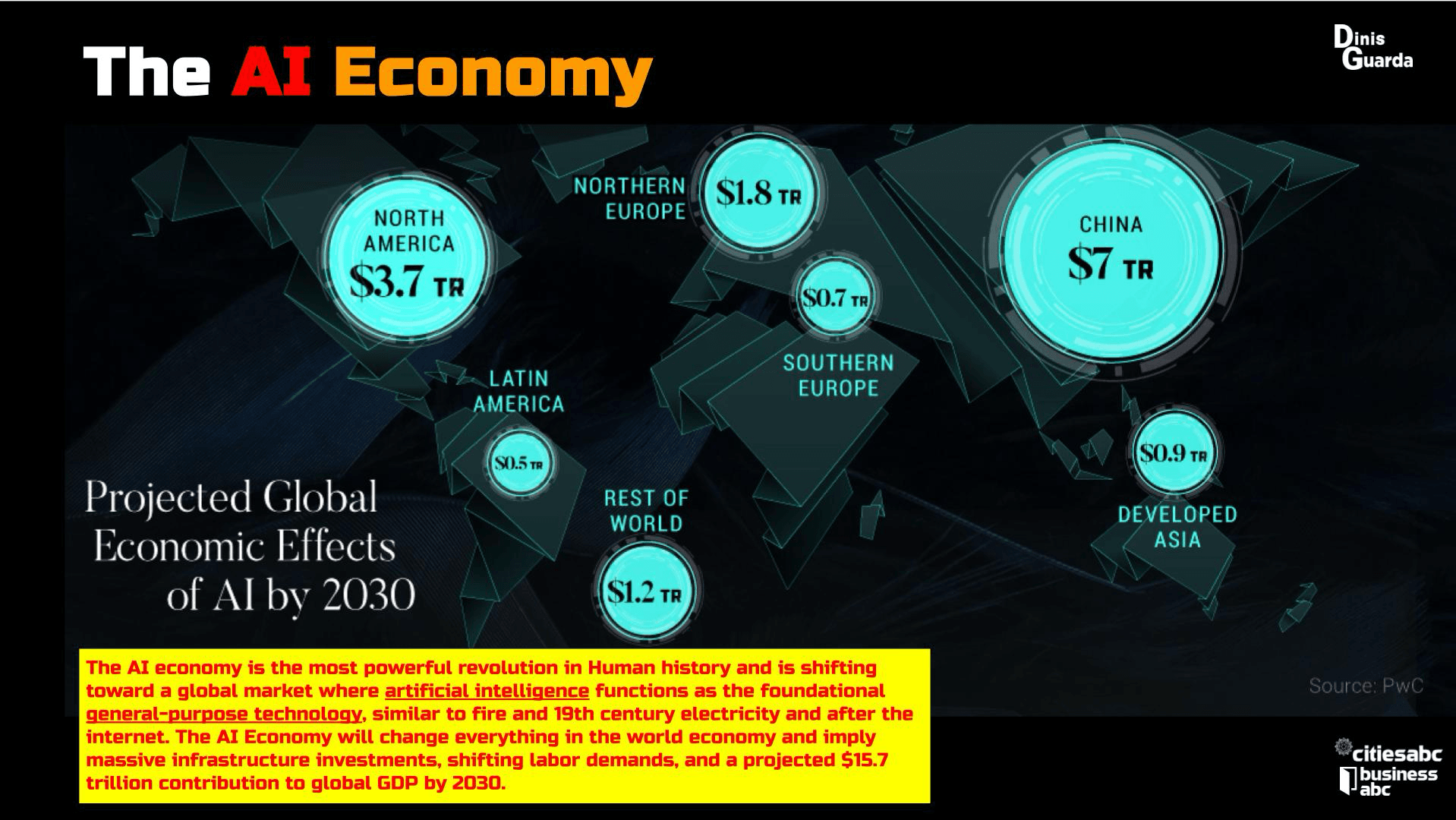
The AI Economy is becoming the operating enable system of our human civilisation. Computation is the new oil. LLM AI Models and AI data centers are the new drivers and factories of the Fifth Industrial Revolution. Digital Identity is the new currency. AI Sovereignty is the new geopolitics.
Read more on Citiesabc
As of 2025, close to one billion humans are already using AI. By 2026, that number will approach 1.8 billion people.
In fact, by the end of 2025, there are well over 10 million AI agents globally. This includes ~5 million industrial robots plus millions of software bots.
This figure is growing quickly as organisations embrace automation. For example, 72% of companies worldwide have adopted at least one AI-based automation solution (e.g. an AI agent) by 2025.
Nevertheless, the AI Economy is not just about automation — It is about who best manages, creates, adapts, owns intelligence, who controls decision-making, and who defines reality itself.
Every nation, platform, and corporation is now racing to build their own “A” and “I” towers.
But very few are prepared, educated, trained and more importantly asking what values they are embedding into them.
We’ve Already Crossed the Point of No Return. AI is not a mere experiment. Not as early adopters. But as daily cognitive infrastructure.
So this is no longer about “AI adoption”. The real battlefield is AI integration, governance, sovereignty, and control. Who owns the models owns the future. Who controls the data controls reality. Who programs intelligence programs society.
The current state of world economy and the AI Economy
The global economy’s total debt
As of mid-2025, the size of the global economy’s total debt reached a record high of approximately $338 trillion. This figure includes debt held by governments, businesses, and households worldwide.
Global debt by sector
According to reporting on the Institute of International Finance’s (IIF) mid-2025 Global Debt Monitor, debt is divided among different sectors of the global economy.
- Government debt: Increased to a record level of over $109 trillion. A June 2025 report from UN Trade and Development (UNCTAD) put global public debt at $102 trillion for the full year of 2024, rising from $97 trillion in 2023.
- Corporate debt: Non-financial companies held $91.3 trillion in 2024.
- Financial institutions debt: Financial companies held $71.4 trillion in 2024.
- Household debt: Household debt stood at $60.1 trillion in 2024.
Debt-to-GDP ratio
The total debt of the world economy relative to its output remains elevated, even though this ratio was pushed down temporarily by economic growth and inflation following the COVID-19 pandemic.
•Overall ratio: The total global debt-to-GDP ratio has trended upwards, reaching approximately 324% in mid-2025.
•Public debt-to-GDP: The ratio for just government debt was 94.7% in 2025, up from 92.4% in 2024.
What is the size of the World economy
The world economy is projected to be approximately $115 trillion in 2025, a figure calculated by summing the gross domestic product (GDP) of all countries. The United States is expected to remain the largest economy, followed by China.
- Overall size: The global economy is projected to reach about $115.3 trillion in 2025, Visual Capitalist notes.
- Largest economies: The United States is expected to have the highest GDP at around $30.3 trillion, followed by China at roughly $19.5 trillion. Germany, Japan, and India are also among the top five largest economies.
- Method of measurement: The size of the world economy is measured by the total nominal gross domestic product (GDP) of all countries worldwide. GDP represents the total monetary value of all finished goods and services produced in a specific period.
The global market for business valuation services
The global market for business valuation services is projected to grow from approximately $6.2 billion in 2024 to $12.8 billion by 2033, with a compound annual growth rate (CAGR) of 7.5% from 2025 to 2033. A related “Valuation and Modelling” market was recorded at $229.937 million in 2021 and is expected to reach $342.23 million by the end of 2025.
Key market factors and trends
- Mergers and acquisitions (M&A): Increased M&A activity is a key driver for business valuation services. In the first half of 2025, M&A involving venture-backed startups surpassed $100 billion, a 155% increase year-over-year.
- Startup funding and exits: Globally, venture capital funding for startups reached $91 billion in Q2 2025, and there are over 150 million startups worldwide, creating consistent demand for valuation services.
- Economic factors: Declining interest rates and lower borrowing costs could lead to higher valuation multiples in 2025.
- AI and technology: Artificial intelligence (AI) and other technologies are significantly impacting startup valuations, driving momentum, and creating new market opportunities.
- Evolving valuation factors: Beyond revenue and growth, investors in 2025 are increasingly focusing on a company’s resilience, scalability, and system maturity. Factors like ESG (Environmental, Social, and Governance) and brand reputation are also gaining importance.
- Regional dynamics: The market growth is not evenly distributed. For example, North America is logging the largest surge, particularly in AI deals. In Europe, Germany has surpassed the UK as the top venture market. Meanwhile, investment in Asia-based startups hit a multiyear low in the first half of 2025.
Market size for unicorn startups
In the startup sector, the total valuation of unicorn companies (privately held companies valued at $1 billion or more) has seen substantial growth:
- Total valuation: The aggregate value of all unicorn companies grew from approximately $300 billion in 2013 to over $5.9 trillion in 2025.
- Number of unicorns: As of April 2025, there are over 1,200 unicorn companies worldwide.
- Geographic concentration: The United States holds the largest share of unicorn valuation at $3.2 trillion, followed by China ($1.4 trillion), India ($0.4 trillion), and the United Kingdom ($0.3 trillion).
The global shadow economy
The global shadow economy was estimated at $12.5 trillion in 2023, which equals 11.8% of the total global GDP. This figure includes all economic activity that is not officially recorded, such as unregistered transactions and tax evasion. This is a large amount, comparable to the combined economic output of Germany, Japan, and India in that year.
•Percentage of GDP: The shadow economy represented 11.8% of total global GDP in 2023.
•Total Value: The total estimated value was $12.5 trillion.
•Comparison: This is equivalent to the combined economic output of Germany, Japan, and India.
•Regional Differences: The shadow economy’s size varies significantly by region. In low-income countries, it can make up a much larger share of GDP, while in high-income countries, it is a smaller percentage.
•Methodology: These figures are often estimated using methods like the “currency demand approach,” which analyzes patterns in cash use across countries.
The size of the 7 biggest companies in the world
The size of the 7 biggest companies in the world varies by metric (revenue vs. market cap) and can fluctuate daily, but as of late 2025, the top 7 by market capitalization are estimated to be worth over $12 trillion combined. These companies, which can change based on the specific ranking source, are often technology and energy giants like Apple, Microsoft, NVIDIA, Amazon, Alphabet, Meta, and Saudi Aramco.
Market capitalisation
•Combined Market Cap: The “Magnificent Seven” collectively had a market capitalization of approximately $12.3 trillion as of late 2023, according to Mellon Investments Corporation.
•Top Companies by Market Cap: As of late 2025, the 7 biggest companies by market capitalization generally include:
- NVIDIA
- Microsoft
- Apple
- Alphabet (Google)
- Amazon
- Meta Platforms
- Saudi Aramco
What World Are We Building with AI?
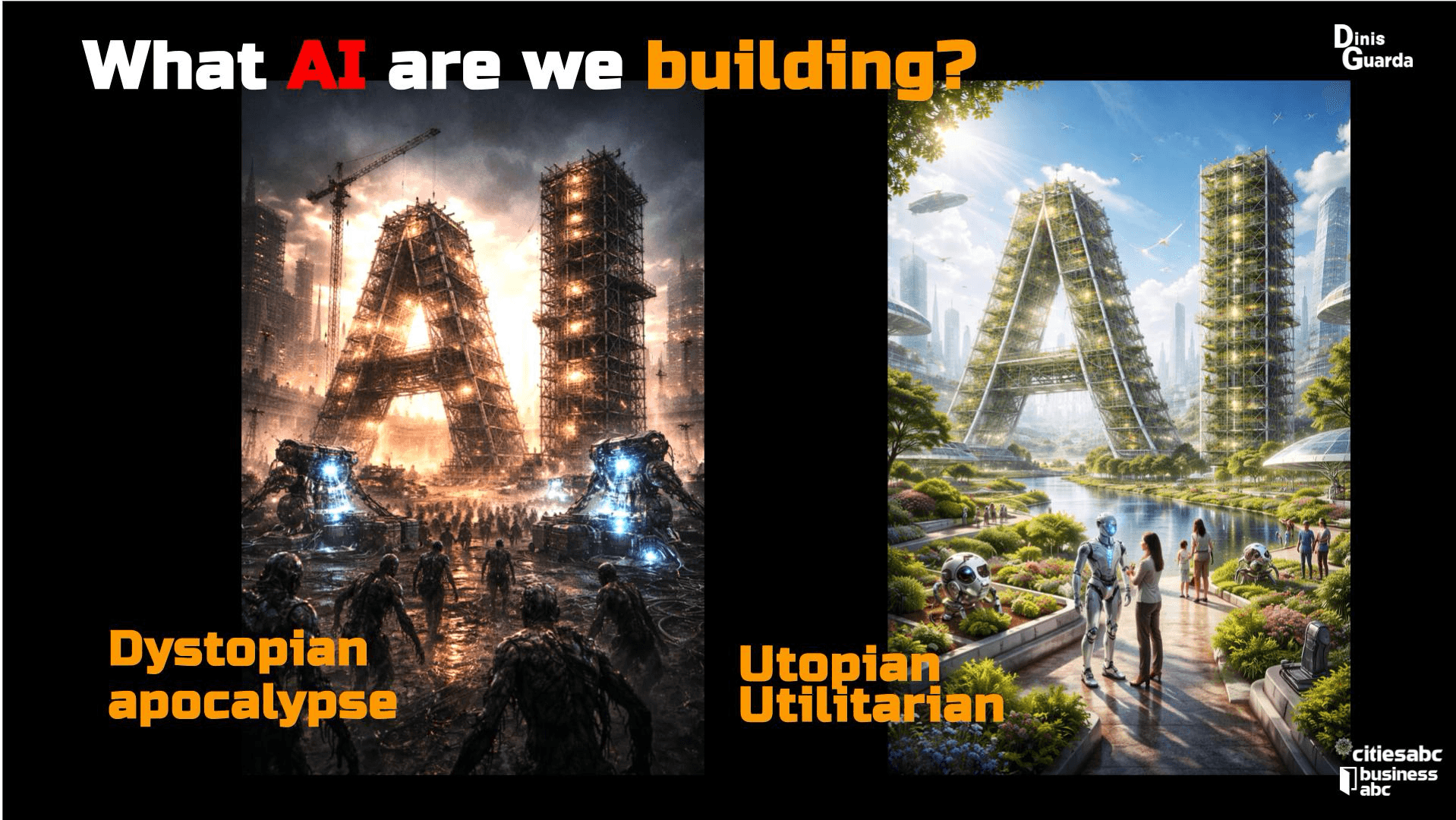
What AI are we building? – Infographic by Dinis Guarda x AI
Two civilizations are rising. At the same time. With the same code. By the same markets. By the same hands. One is a luminous, regenerative world — where AI becomes an extension of human dignity, creativity, medicine, education, and planetary healing.
The other is a dark industrial cathedral — built on surveillance, extraction, dependency, and algorithmic control. And here is the uncomfortable truth: We are building both. Right now.
The question is no longer whether AI will shape humanity. It already has.
The real question is: Which humanity will survive it — and which will be programmed to serve it?
The Questions No One Wants to Ask
In a world where intelligence becomes abundant… What becomes rare? Human judgment. Human creativity. Human ethics. Human meaning. The next generation will not compete against AI. They will have to evolve with it — or be outpaced by it. This is not a technology transition. This is a civilizational fork. And the AI towers are already rising.
- With close to 1 billion people using AI as of 2025 The Problem is not AI Adoption: but AI digital transformation and Integration. The projected Global Monthly AI Users by 2026 will be around 1.8 billion consumers with a significant portion using it weekly or monthly.
- AI Sovereignty is the real challenge and businesses and governments will have to move on this as they understand the challenges and opportunities and this is most critical and urgent.
- AI Risks / Cybersecurity is Becoming the Dangerous Systemic biggest challenge for our civilization.
- With Billion of AI Agents how will we cope and manage The Agentic Workforce: A redesign of roles, authority, and managerial legitimacy.
- Human Ingenuity and Creativity in a time of AI has to be redesigned as special young people have to rise with AI and integrate it while developing themselves!
AI + 360 Digital ID & Risks How Do We Cope With This?
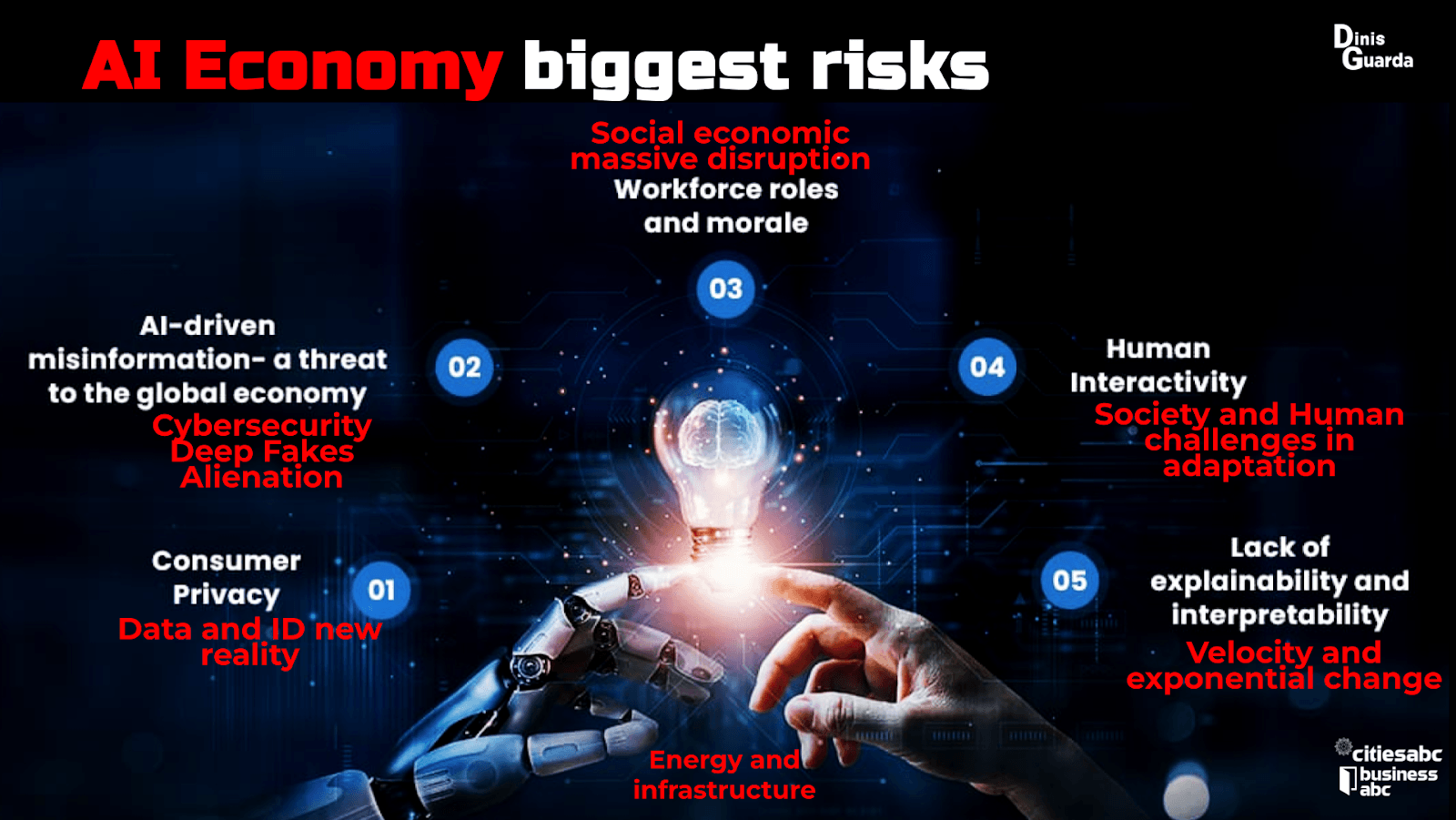
Your identity is becoming programmable.
Your reputation, access, trust, financial ability, medical priority, legal rights, and even emotional profiling are quietly being integrated into AI systems.
Soon, your digital twin will speak before you do.
Decisions will be made before you arrive.
Your future will be calculated before you imagine it.
We are moving from Human Identity → Algorithmic Identity.
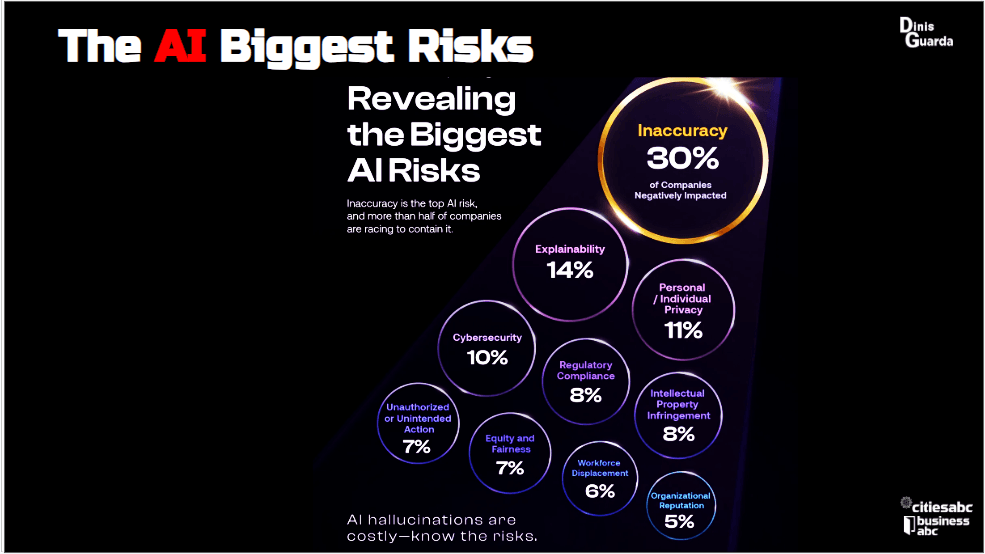
The question becomes: Will your AI represent you… Or replace you?
We are now in the AI ID paradigm. How do we move? Not by fear. Not by denial. Not by nostalgia. We cope by engineering ethics into infrastructure.
By embedding human values into code.
By building AI that augments dignity — not erases it.
By creating sovereign platforms that serve societies, not extract them.
This is not about stopping AI. This is about choosing what kind of civilization we allow it to build.
Because whether we like it or not… The AI towers are already rising.